

The pitch is everywhere right now: mesenchymal stem cells (MSCs) for recovery, joints, inflammation, and “next-level” longevity. And if you spend any time in performance and wellness circles, you have probably heard a friend say, “I did stem cells and I feel amazing,” right next to someone else warning, “Be careful – it’s the Wild West.”
Both can be true, depending on what you’re actually getting, how it’s prepared, how it’s delivered, and what problem you’re trying to solve.
This is a clear-eyed look at mesenchymal stem cells benefits and risks – what’s promising, what’s overhyped, and what a smart, safety-first decision process looks like.
What mesenchymal stem cells actually are.
MSCs are a type of adult stromal cell found in tissues like bone marrow, adipose (fat), and perinatal tissues (often discussed as “birth-tissue derived,” such as umbilical cord related sources). In research and clinical conversations, MSCs are popular because they don’t just sit there and “become” new tissue like a magical replacement part. Their reputation comes from signaling.
In plain English, MSCs are often described as “messenger” or “manager” cells. They release factors that can influence inflammation, immune activity, and tissue repair signaling. That’s why the same category of cells gets discussed for everything from orthopedic issues to systemic wellness goals.
At the same time, MSCs are not a single, uniform product. Source matters. Processing matters. Storage and handling matter. And the “MSCs” label can be used loosely in marketing, which is where outcomes can diverge fast.
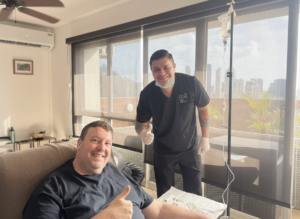 https://stemcellspluspeptides.com/recovering-from-heart-failure-using-stem-cells-and-peptides/ Randy Hilarski receiving mesenchymal stem cells and exosomes for treatment of congestive heart failure in 2025.
Mesenchymal stem cells longevity benefits: what people are chasing, and why
The biggest reason MSCs are trending in regenerative wellness is that many people are stuck between two options that feel unsatisfying: live with chronic pain and reduced performance, or manage it with medications and repeated procedures that don’t address the underlying biology. MSCs sit in the middle as a biology-forward, recovery-focused approach.
Recovery and inflammation signaling
A common goal is calmer inflammation and better recovery capacity. People pursuing MSCs often report improvements in stiffness, “creaky” joints, and post-exercise soreness. The science conversation here is usually about immunomodulation – MSCs can influence inflammatory pathways and local immune behavior through the signals they release.
The trade-off: this is also where expectations can get sloppy. “Lower inflammation” is not the same as “cures autoimmune disease,” and it’s not the same as “rebuilds cartilage.” You’re aiming for a shift in the local environment, not an instant structural reset.
Joint comfort and orthopedic function
Orthopedic wellness is one of the most common use cases: knees, shoulders, hips, low back, and general wear-and-tear. Many adults want to keep training, keep hiking, keep playing golf, keep doing life – without escalating to surgery.
Where MSCs can make sense is when the goal is improved comfort, range of motion, and function. Where marketing often crosses a line is promising regeneration as a guarantee. Tissue changes are complex, and results depend on severity, biomechanics, and whether someone is also addressing movement quality, strength, body composition, and recovery habits.
Post-injury performance goals
Another real driver is the high performer mindset: people want to shorten downtime and return to training with confidence. MSCs are often positioned as a way to support the body’s repair signaling after injuries.
The reality check is important: if you have an acute structural injury that requires orthopedic evaluation, MSCs are not a substitute for diagnosis. They may be part of a broader plan, but they shouldn’t replace imaging, rehab, or professional oversight.
Longevity and “system-wide” wellness
The longevity audience is motivated by the idea that improved cellular signaling could mean better aging. That interest is understandable, and it’s why MSCs remain a hot topic.
But if your goal is vague – “I just want to feel younger” – it becomes easier to overspend, accept weak protocols, or chase a treatment plan that doesn’t match your biology. The highest-value moves in longevity still start with fundamentals (sleep, resistance training, metabolic health), and advanced interventions should be chosen like investments: with clear goals, realistic upside, and defined risk.
Mesenchymal stem cells risks: what a serious provider will discuss
If someone is selling you MSCs like they’re a guaranteed upgrade with no downside, that’s not confidence – that’s a warning sign.
Product quality and identity risk
The single biggest risk category is not the concept of MSCs. It’s what you actually receive.
Cells can vary dramatically based on sourcing, processing standards, contamination controls, and chain-of-custody. Some offerings advertised as “stem cells” may contain few viable cells, may not be MSCs at all, or may be handled in ways that compromise integrity.
For you as a consumer, that quality risk translates into two problems: you can pay premium pricing for low potency, and you can expose yourself to unnecessary safety risk if sterility and handling are not airtight.
Infection and procedure-related complications
Any injection-based intervention carries procedural risk. Infection is the one nobody wants to think about, but it’s a real consideration. Risk also depends on where the cells are delivered and the sterility protocols used.
There are also more routine procedure-related issues like pain flare, swelling, bruising, or temporary limitation of activity. A responsible plan sets expectations for what “normal” looks like after treatment and when to escalate concerns.
Immune reactions and inflammatory flares
Because MSCs interact with immune signaling, some people worry about immune reactions. The conversation varies based on the product type and how it’s administered.
In real-world terms, some individuals may experience a short-term inflammatory flare or feel “off” for a period after treatment. That’s not automatically dangerous, but it should be anticipated and monitored. If a clinic acts surprised that anyone ever reacts, that’s a clue they’re not tracking outcomes carefully.
Thrombosis, embolic risk, and route of administration
When people talk about “IV stem cells,” the route matters. Introducing biologic material into the bloodstream raises different risk considerations than a localized injection.
This is not a reason to panic, and it’s not a reason to assume IV is always inappropriate. It’s a reason to insist on a provider who can explain why a route is chosen for your goals, what screening is done, and how risk is managed.
Tumor concerns and unrealistic claims
The question shows up a lot: “Can stem cells cause cancer?”
The honest answer is that biology is complex, and risk discussions depend on the cell type, how it’s expanded or manipulated, and the patient context. A trustworthy provider won’t brush it off, and they also won’t use fear to sell you.
What you should take from this is practical: avoid clinics making aggressive, disease-treatment claims or promising outcomes across unrelated conditions. When marketing becomes miracle language, safety standards are often not far behind.
Legal and regulatory gray zones
In the US, parts of the stem cell market sit in confusing territory. Some offerings are clearly positioned as regulated medical procedures under appropriate oversight. Others are marketed in ways that attempt to sidestep scrutiny.
You don’t need to become a regulatory expert. You do need to ask direct questions: What exactly is being administered? What is the source? What testing is done? What adverse events have occurred in their practice? What is the follow-up plan?
How to weigh mesenchymal stem cells benefits and risks for your goals
The most useful way to think about MSCs is like you’d think about any performance tool: the value depends on fit.
If your issue is mild-to-moderate joint discomfort and you’re already doing the basics (training smart, staying lean enough for your joints, sleeping, doing rehab), MSCs may be a reasonable “stack” to consider. If you have severe structural damage, severe instability, or an undiagnosed problem, your best next step is often a real diagnostic workup, not a pricey injection.
Timing matters too. Some people chase MSCs after years of wear and tear, expecting a dramatic reversal. Others pursue them earlier, when tissue environment and habits are more favorable. It depends, and a good consult should tell you where you sit on that spectrum.
What to ask before you schedule anything
A high-quality consultation should feel like a screening process, not a hype session. You want clear answers on what you’re receiving, why it matches your goal, and how risk is managed.
Ask about sourcing and handling standards, what kind of testing is performed, and who is overseeing the process clinically. Ask what a typical response timeline looks like and what “non-response” rates look like in their experience. Also ask what they recommend you do alongside treatment, because if the answer is “nothing, just wait for the magic,” you’re not being treated like a serious adult.
If you want a starting point for that kind of consultative workflow, Stem Cells and Peptides positions MSC conversations around guided scheduling rather than impulse buying – which is exactly how this category should be approached.
The bottom line: be optimistic, not naive
MSCs are compelling because the upside is real for the right person with the right protocol. They’re also risky when the product is vague, the claims are loud, and the process is rushed.
Your smartest move is to treat MSCs like a precision tool. Get specific about the outcome you want, get honest about what’s driving your symptoms, and choose a provider who can speak to both the promise and the guardrails without flinching.
The best feeling after a stem cell decision is not hype. It’s clarity.