
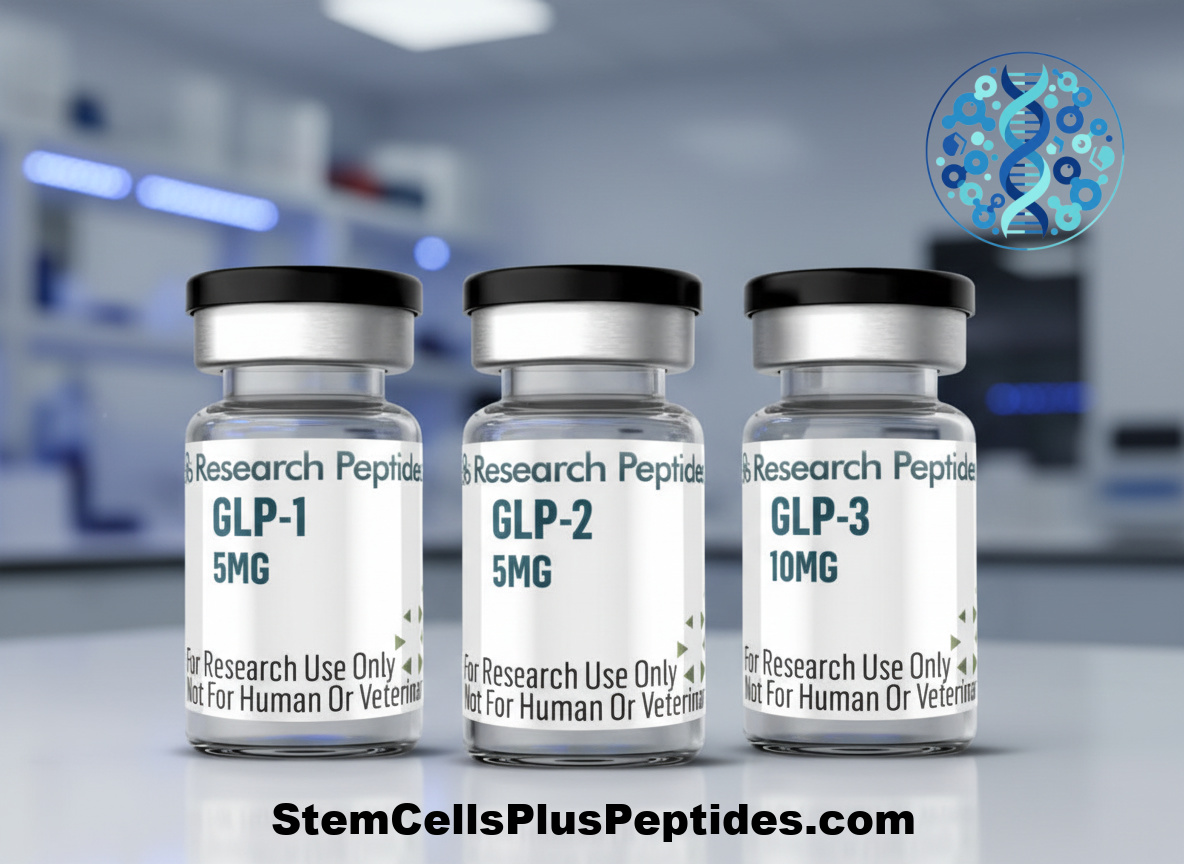
Semaglutide vs Tirzepatide vs Retatrutide: What’s the Difference? Learn About All Peptides for Weight Loss.
People often group semaglutide, tirzepatide, and retatrutide together because they’re all part of a newer wave of metabolic peptides for weight loss that influence appetite, blood sugar, and body weight. But they are not the same drug, and the “GLP-1 / GLP-2 / GLP-3” shorthand you’ll see online can be confusing.
In simple terms:
- Semaglutide is primarily a GLP-1 receptor agonist.
- Tirzepatide is a dual agonist (GLP-1 + GIP).
- Retatrutide is a triple agonist (GLP-1 + GIP + glucagon).
This article breaks down what each one is, what they’re being researched for, and the possible side effects.
Quick clarification: “GLP-2” and “GLP-3” aren’t official drug classes
You’ll sometimes see tirzepatide called “GLP-2” and retatrutide called “GLP-3.” That’s not a formal medical classification.
- GLP-1 is a real hormone target (glucagon-like peptide-1).
- GLP-2 is also a real hormone, but tirzepatide is not a GLP-2 drug.
- “GLP-3” is not a standard hormone category.
A more accurate way to describe them is:
- Semaglutide = GLP-1 agonist
- Tirzepatide = GLP-1 + GIP agonist
- Retatrutide = GLP-1 + GIP + glucagon agonist
What GLP-1, GIP, and glucagon do (in plain language)
These drugs work by mimicking (or activating receptors for) hormones involved in metabolism.
GLP-1 (glucagon-like peptide-1)
GLP-1 is released after you eat. It helps:
- Increase insulin release when glucose is high
- Reduce glucagon (a hormone that raises blood sugar)
- Slow stomach emptying (you feel full longer)
- Reduce appetite via brain signaling
GIP (glucose-dependent insulinotropic polypeptide)
GIP is another “incretin” hormone released after meals. It can:
- Support insulin secretion in a glucose-dependent way
- Influence fat metabolism and energy balance
In combination with GLP-1, GIP activation may improve weight loss and glucose control for some people.
Glucagon
Glucagon generally raises blood sugar by telling the liver to release glucose. But it also:
- Can increase energy expenditure
- Can influence fat breakdown
A drug that activates glucagon receptors alongside GLP-1 and GIP is designed to push weight loss further while balancing glucose effects.
Semaglutide (GLP-1): What it is
Semaglutide is a GLP-1 receptor agonist. It’s been studied and used for:
- Type 2 diabetes management
- Chronic weight management in certain populations
How semaglutide tends to work
Semaglutide’s main effects are:
- Appetite reduction (people often feel less “food noise”)
- Slower gastric emptying (fullness)
- Improved post-meal insulin response
What semaglutide is being researched for
Beyond weight loss and type 2 diabetes, GLP-1 drugs have been researched for a wider set of metabolic and cardiovascular topics, including:
- Cardiovascular risk reduction in people with obesity and/or diabetes
- Fatty liver disease (MASLD/NAFLD/NASH) and liver inflammation
- Kidney outcomes in metabolic disease
- Addiction-related behaviors and reward pathways (early research)
- Inflammation-related pathways (still developing)
Research focus changes quickly, and not all uses are approved or appropriate for everyone.
Possible side effects of semaglutide
The most common side effects are gastrointestinal:
- Nausea
- Vomiting
- Diarrhea
- Constipation
- Abdominal pain/bloating
- Reduced appetite (expected, but can be too strong)
Other possible issues reported/monitored:
- Fatigue
- Headache
- Dizziness
- Acid reflux/heartburn
More serious risks (less common, but important to know about):
- Gallbladder problems (gallstones, gallbladder inflammation)
- Pancreatitis (rare, but a known concern with this drug class)
- Dehydration from vomiting/diarrhea (can affect kidneys)
- Hypoglycemia mainly when combined with other glucose-lowering meds (like insulin or sulfonylureas)
Many GLP-1 drugs also carry warnings related to thyroid C-cell tumors based on animal data; clinical relevance to humans is still discussed, and guidance depends on personal/family history.
Tirzepatide (GLP-1 + GIP): What it is.
Tirzepatide is a dual agonist peptide that targets:
- GLP-1 receptors
- GIP receptors
It has been studied and used for:
- Type 2 diabetes management
- Chronic weight management in certain populations
Book a Call for Wholesale Peptides for Your Research.
How tirzepatide differs from semaglutide
While both can reduce appetite and improve glucose control, tirzepatide adds GIP receptor activity. In clinical research, this dual action has often been associated with:
- Greater average weight loss (in many head-to-head comparisons)
- Strong glucose-lowering effects
Individual results vary a lot, and tolerability can differ.
What tirzepatide is being researched for
In addition to diabetes and obesity, research areas include:
- Cardiometabolic risk (blood pressure, lipids, inflammation markers)
- Sleep apnea in people with obesity (weight-loss driven benefit)
- Fatty liver disease and liver fat reduction
- Heart failure and cardiovascular outcomes (ongoing research)
Possible side effects of tirzepatide
Side effects overlap heavily with semaglutide:
- Nausea
- Vomiting
- Diarrhea
- Constipation
- Abdominal discomfort
Other possible effects:
- Reduced appetite
- Fatigue
- Injection-site reactions
Potential serious risks (similar class concerns):
- Gallbladder disease
- Pancreatitis
- Dehydration and kidney strain
- Hypoglycemia when combined with certain diabetes meds
Some people report that one drug feels “easier” than the other, but that’s highly individual.
Retatrutide (GLP-1 + GIP + glucagon): What it is
Retatrutide is a triple agonist that targets:
- GLP-1 receptors
- GIP receptors
- Glucagon receptors
GLP-3 is best understood as a next-generation investigational approach designed to push weight loss and metabolic improvements further by adding glucagon receptor activity.
How retatrutide differs from semaglutide and tirzepatide
Retatrutide includes everything tirzepatide does (GLP-1 + GIP) plus glucagon receptor activation. The intended impact of adding glucagon signaling is:
- Increased energy expenditure
- Increased fat oxidation
…while GLP-1 and GIP actions help control appetite and glucose.
What retatrutide is being researched for
Retatrutide has been researched primarily for:
- Obesity and weight management
- Type 2 diabetes and metabolic outcomes
Additional areas of interest in the broader “triple agonist” space include:
- Fatty liver disease and liver fat reduction
- Cardiometabolic risk factors (lipids, blood pressure, inflammation)
Because it’s newer, the research base is still developing compared with semaglutide.
Possible side effects of retatrutide
Reported side effects in trials have been similar in category to other incretin-based therapies, especially GI effects:
- Nausea
- Vomiting
- Diarrhea
- Constipation
Because glucagon receptor activation can influence heart rate and metabolism, researchers also watch for:
- Increased heart rate
- Changes in blood pressure
- Tolerability at higher doses
As with the others, gallbladder issues, pancreatitis risk signals, and dehydration-related complications remain important safety topics to monitor.
Head-to-head comparison (simple)
| Feature | Semaglutide | Tirzepatide | Retatrutide |
|---|---|---|---|
| Receptor targets | GLP-1 | GLP-1 + GIP | GLP-1 + GIP + glucagon |
| Main “feel” | Appetite reduction, slower digestion | Appetite reduction + stronger metabolic signaling | Appetite reduction + stronger metabolic + energy expenditure |
| Research maturity | Most established | Established but newer than semaglutide | Newest / more investigational |
| Side effect pattern | Mostly GI | Mostly GI | Mostly GI + more monitoring for metabolic/cardiac effects |
Why people research or pursue these therapies
People are interested in these drugs for a few big reasons:
1) Weight loss and appetite control
For many, the biggest draw is reduced appetite and fewer cravings, which can make it easier to sustain a calorie deficit.
2) Blood sugar and insulin resistance
These therapies can improve glucose control and insulin response, which is a major reason they were developed.
3) Cardiometabolic risk reduction
Weight loss plus improved glucose control often improves other markers like:
- Blood pressure
- Triglycerides
- HDL/LDL patterns
- Inflammation markers
4) Fatty liver and metabolic inflammation
Reducing body fat and improving insulin sensitivity can reduce liver fat in many people, which is why this is a big research area.
Practical considerations (non-medical advice)
If someone is considering a GLP-1/GIP-based therapy, the most important real-world factors usually are:
- Titration speed (going up too fast often increases nausea)
- Protein and hydration (to reduce fatigue and muscle loss risk)
- Electrolytes if vomiting/diarrhea occurs
- Strength training to preserve lean mass
- Medication interactions (especially diabetes meds)
And most importantly: these drugs should be discussed with a qualified clinician, especially if someone has a history of pancreatitis, gallbladder disease, severe GI disease, or is on complex diabetes regimens.
Bottom Line on Peptides for Weight Loss.
- Semaglutide is a GLP-1 agonist with strong evidence for appetite reduction and metabolic improvement.
- Tirzepatide adds GIP activity and is often associated with greater average weight loss and glucose improvements in research.
- Retatrutide adds glucagon receptor activity on top of GLP-1 and GIP, aiming for even stronger weight-loss effects, but it’s newer and still developing in the research landscape.
All three peptides for weight loss are being researched heavily for obesity, diabetes, and broader cardiometabolic outcomes. Their most common side effects are gastrointestinal, with more serious but less common risks that should be taken seriously and monitored.
Note: This article is for educational purposes only and is not medical advice. Always consult a licensed healthcare professional for diagnosis and treatment decisions. Buy GLP’s for Research Purposes.