
If you are looking at regenerative options, the real question is not whether mesenchymal stem cells sound advanced. It is how mesenchymal stem cells work inside a living system where inflammation, tissue stress, and recovery are all happening at once. That is where the value is – not in hype, but in mechanism.
Mesenchymal stem cells, often called MSCs, are studied because they do more than simply exist in the body as raw replacement parts. They respond to biological signals, interact with immune activity, and release compounds that influence how tissue environments behave. For wellness-minded adults focused on recovery, performance, and healthy aging, that distinction matters. The benefits associated with MSCs are generally tied less to becoming new tissue at scale and more to how they help coordinate repair.
How mesenchymal stem cells work in the body
A simple way to think about MSCs is that they are highly responsive support cells. When introduced into the body, they do not randomly build new structures wherever they land. They react to cues from damaged or inflamed tissue and then release signaling molecules that can help shift the local environment.
This is one of the biggest reasons MSCs became such a major topic in regenerative medicine. They are known for what is often called paracrine signaling. That means they secrete bioactive factors – including cytokines, growth factors, and extracellular vesicles – that can influence nearby cells. Those signals may help calm excessive inflammation, support tissue repair pathways, and encourage healthier cellular communication.
In other words, MSCs often act more like biologic conductors than bricks. They help organize the response.
They modulate inflammation
Inflammation is not always the enemy. Acute inflammation is part of normal healing. The problem starts when inflammation becomes excessive, chronic, or poorly regulated. In that setting, tissues may struggle to recover efficiently, and people may notice lingering pain, stiffness, or reduced function.
MSCs are widely studied for their immunomodulatory effects. They can interact with immune cells such as T cells, B cells, macrophages, and natural killer cells. Depending on the context, they may help reduce overactive inflammatory signaling and promote a more balanced immune response. That does not mean they shut the immune system down. It means they may help move it away from chaos and toward regulation.
For people exploring regenerative wellness, this is where the conversation often gets practical. If your body is stuck in a cycle of irritation and incomplete recovery, improving the signaling environment may be more meaningful than chasing a quick fix.
They support repair signaling
Another key part of how mesenchymal stem cells work is their role in repair support. MSCs release factors associated with angiogenesis, cell survival, and tissue remodeling. Angiogenesis refers to the formation of new blood vessels, which matters because recovering tissue needs oxygen and nutrients. Cell survival signals matter because stressed cells often need help staying functional long enough to recover.
This does not guarantee the same outcome in every person or every tissue type. Joint-related applications, soft tissue concerns, and broader inflammatory issues can all behave differently. The mechanism is promising, but the biological context always matters.
What mesenchymal stem cells actually do – and what they do not
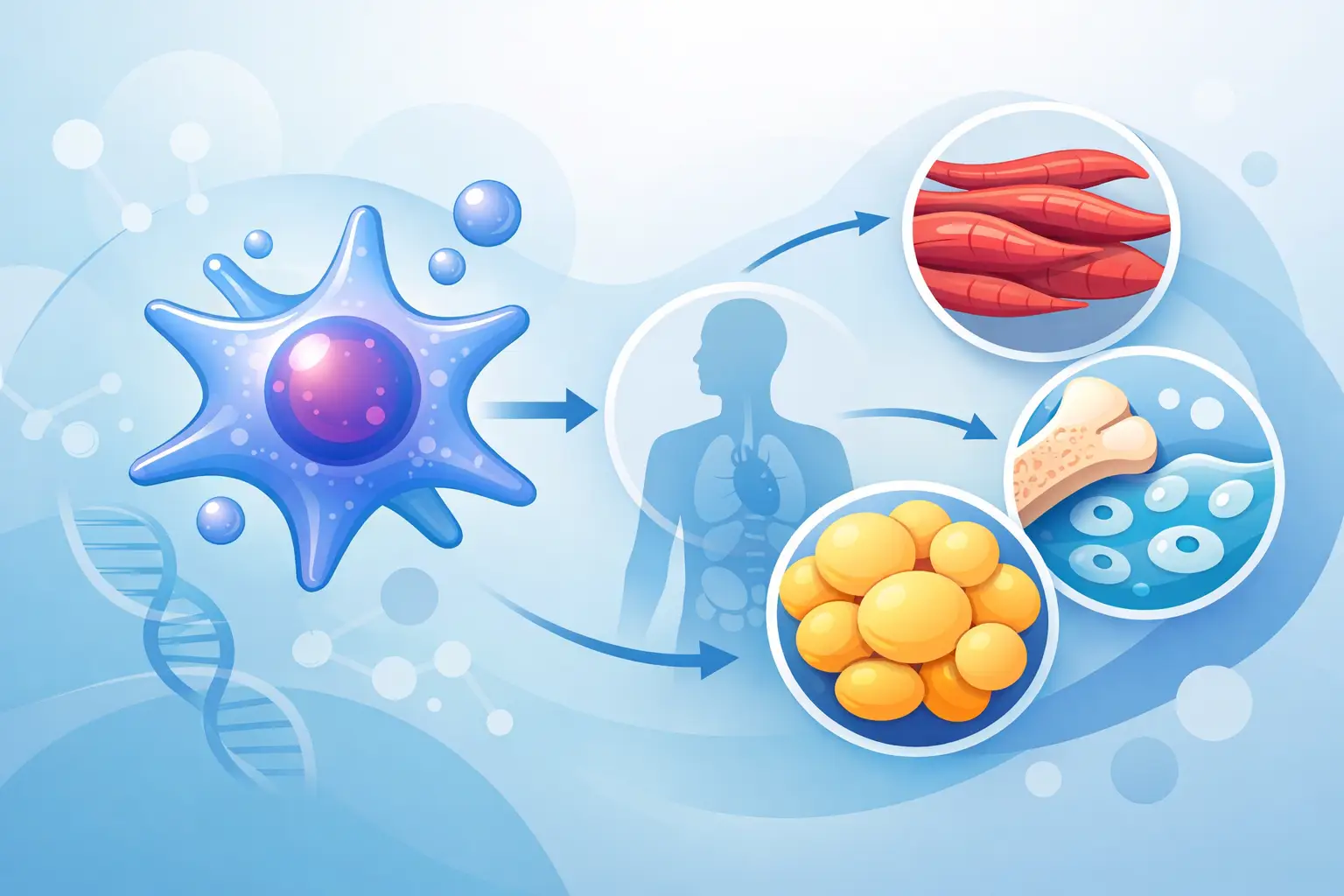
A lot of confusion comes from oversimplifying stem cells as if they automatically turn into whatever the body needs. MSCs can differentiate into certain cell types under the right conditions, including bone, cartilage, and fat lineage cells. That potential is real, but it is not the full story and usually not the main reason they generate so much interest.
The more modern view is that their signaling activity is central. They help create a better setting for recovery rather than single-handedly rebuilding the entire structure. That is a more accurate and more useful way to understand them.
This also helps set expectations. MSCs are not magic. They do not override advanced degeneration, poor metabolic health, or years of accumulated stress in one move. Results depend on the source of the cells, how they are prepared, where they are used, the patient profile, and the underlying condition being addressed.
That last point is worth emphasizing. Someone seeking support for post-exercise recovery may have a very different experience from someone dealing with long-term inflammatory wear and tear. The mechanism may overlap, but the outcome pathway is not identical.
Why source and quality matter
When people ask how mesenchymal stem cells work, they are often really asking a second question underneath it: what makes one MSC offering different from another?
Quality starts with sourcing, processing standards, handling, and clinical decision-making. Cell viability, purity, and consistency matter because living biologics are sensitive. If the cells are not handled correctly, the theoretical mechanism becomes less relevant.
That is why serious buyers and serious patients tend to focus on guided pathways rather than impulse decisions. In regenerative medicine, consultation is part of quality control. You want alignment between goals, medical context, and the actual product being considered.
For a brand operating at the intersection of regenerative wellness and advanced biomedical demand, this is not a minor detail. It is the difference between trend-chasing and informed strategy.
How mesenchymal stem cells work with recovery and wellness goals
For the health optimization crowd, the appeal of MSCs usually comes down to recovery, resilience, and longevity support. If the body can manage inflammation better and maintain healthier repair signaling, the downstream effect may show up in movement, comfort, training consistency, and general quality of life.
That said, wellness goals are broad. Some people are trying to stay active as they age. Others are trying to recover faster, preserve performance, or support a more proactive anti-aging strategy. MSCs fit into that conversation because they are being studied as a way to influence the biology behind those goals, not just the symptoms.
This is also where expectations should stay grounded. MSCs are not a substitute for sleep, training balance, metabolic health, nutrition, or smart recovery habits. They may complement a larger strategy, but they do not erase the basics. The strongest outcomes usually happen when advanced tools are layered onto a body that is already being supported well.
The role of the tissue environment
One of the most overlooked parts of how mesenchymal stem cells work is that they are highly dependent on the environment they enter. An inflamed joint, a metabolically stressed system, and a relatively healthy tissue bed will not all communicate with MSCs the same way.
That matters because regenerative results are rarely just about the cells themselves. They are about the conversation between the cells and the tissue environment. If the environment is highly hostile, the response may be limited. If the environment is receptive, the signaling effects may be more productive.
This is one reason personalized consultation matters so much. The same intervention can look very different depending on age, inflammatory status, lifestyle, training load, and health history.
Why this topic keeps growing
MSCs continue to attract attention because they sit at the center of a major shift in medicine and wellness. People are no longer only asking how to suppress symptoms. They are asking how to support repair, regulate inflammation more intelligently, and stay functional longer.
That trend is not going away. It is why regenerative medicine has moved from niche discussion into mainstream interest among athletes, executives, longevity-focused adults, and clinics looking for next-generation solutions. It is also why education matters. The people getting the best value from this space are usually the ones who understand mechanism, trade-offs, and fit.
At Stem Cells and Peptides, that is exactly why the consultative model makes sense. Advanced biologics deserve more than surface-level marketing. They require the right conversation.
Mesenchymal stem cells are compelling because they work with biology rather than against it. If you are exploring regenerative options, the smartest move is to look past buzzwords and ask a sharper question: does this approach match your goals, your timeline, and the condition of the system you are asking it to support?