
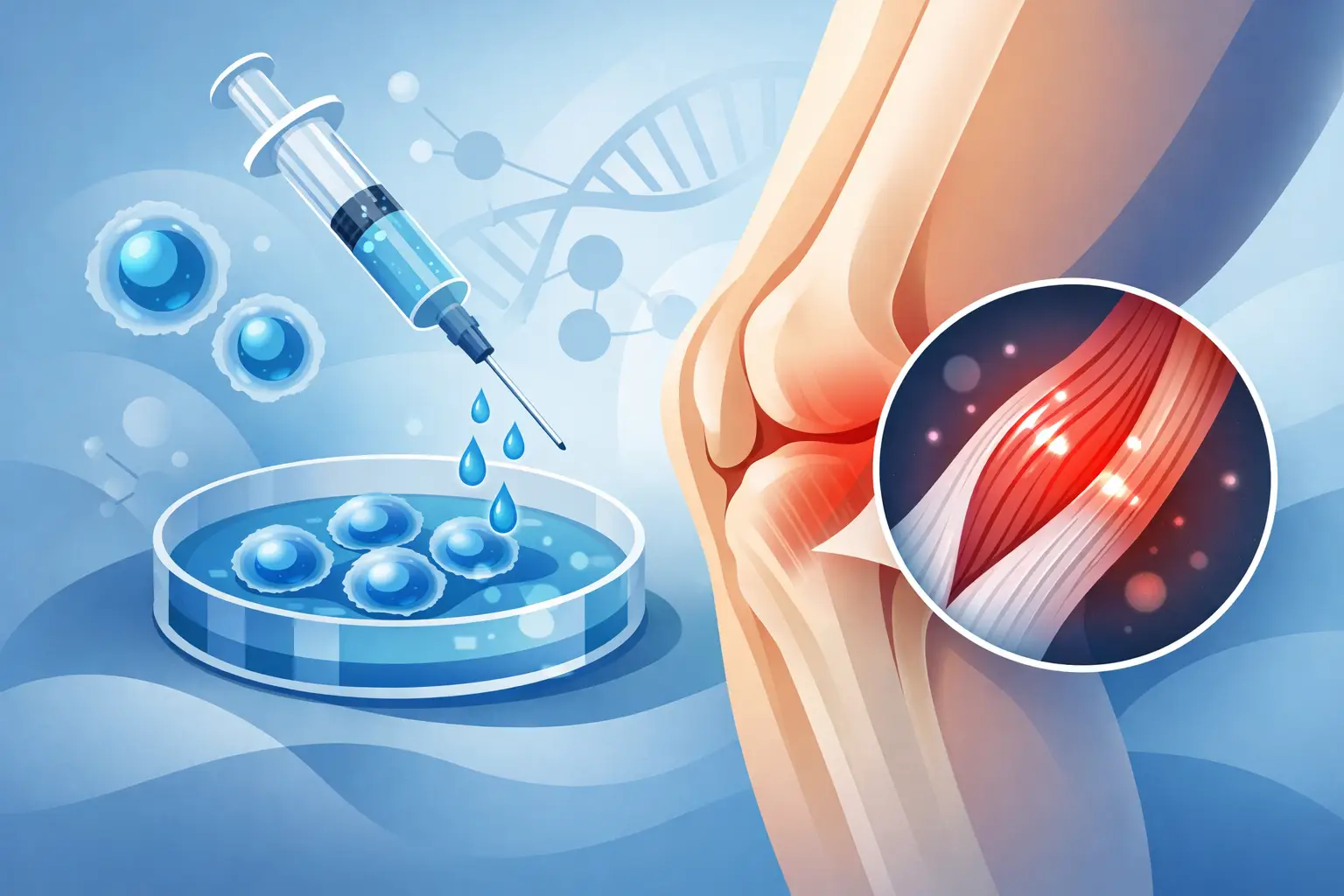
A stubborn tendon injury can wreck more than a workout plan. It can change how you train, how you work, how you sleep, and how confident you feel loading the joint at all. That is why stem cell therapy for tendon injury keeps drawing attention from athletes, active adults, and recovery-focused patients looking for something beyond rest, physical therapy, and repeated cycles of flare-ups.
Tendon problems are frustrating because they often heal slowly. Unlike muscle, tendon tissue has a limited blood supply, which can make recovery drag on for months. Some injuries improve with time and disciplined rehab. Others settle into a pattern of pain, stiffness, and partial function that never quite feels resolved.
This is where regenerative medicine enters the conversation. The promise is not magic. It is the idea that advanced biologic therapies may help support the body’s repair response in tissue that does not bounce back easily on its own. For the right patient, that is a serious advantage.
Why tendon injuries are so difficult to fix
Tendons connect muscle to bone and transfer force every time you sprint, lift, jump, grip, or change direction. They are built for load, but repetitive stress, age-related tissue changes, poor mechanics, and sudden overload can push them past their limit.
Common trouble spots include the Achilles tendon, patellar tendon, rotator cuff tendons, tennis elbow, golfer’s elbow, and gluteal tendons around the hip. Some cases involve tendinitis, which points to short-term inflammation. Many long-running cases are closer to tendinosis, where the tendon structure itself becomes disorganized and degenerative.
That distinction matters. If the issue is not just inflammation but actual tissue breakdown, anti-inflammatory measures alone may not move the needle enough. You might feel temporary relief, then return to the same weakness, pain with loading, or repeated re-injury.
What stem cell therapy for tendon injury is designed to do
Stem cell therapy for tendon injury is generally discussed as a regenerative strategy intended to support healing in damaged or chronically irritated tendon tissue. In many clinics, the focus is on mesenchymal stem cells, which are studied for their ability to interact with the healing environment through signaling, immune modulation, and support of tissue repair processes.
That last point is worth slowing down for. The real value is not that stem cells simply turn into a brand-new tendon on command. The bigger interest is how they may influence the local repair environment, including inflammation signaling, cellular activity, and matrix remodeling. In plain English, the goal is to give a stalled healing process a stronger biological push.
For active adults, this can be appealing when conservative care has plateaued. For performance-driven patients, it offers a path that is more advanced than waiting and hoping, but less aggressive than jumping straight to surgery.
Who may consider stem cell therapy for tendon injury
Not every tendon issue calls for regenerative treatment. A mild strain that just happened may respond well to load management, physical therapy, and time. But there are cases where a more advanced option starts to make sense.
Patients often look into stem cell therapy when they have chronic tendon pain that has lasted for months, imaging that shows tendinosis or a partial tear, recurrent symptoms despite rehab, or a goal of improving function without moving immediately to surgery. It can also attract people who are highly motivated to protect long-term performance rather than just masking pain.
Age and activity level both shape the conversation. A 35-year-old recreational athlete with chronic Achilles pain may have a very different treatment path than a 62-year-old dealing with rotator cuff degeneration and reduced shoulder strength. The tendon involved matters too. Some areas tolerate conservative care well. Others are more likely to stay irritated because of ongoing load, poor circulation, or anatomical stress.
This is why a proper consultation matters. Good candidates are not selected by hype. They are selected by history, imaging, exam findings, prior treatment response, and realistic goals.
What the treatment process usually looks like
The exact protocol varies by provider, but the process often starts with a clinical review of symptoms, function, previous therapies, and imaging. The target is to confirm that the tendon itself is a meaningful source of pain and that regenerative treatment is a sensible next move.
If a patient moves forward, the therapy is typically delivered as an image-guided injection into or around the injured tendon region. Precision matters. Tendons are not forgiving structures, and placement is part of the strategy.
After the procedure, patients are usually not sent back to full activity right away. That is a major misconception. Regenerative treatment still depends on intelligent rehab. The biologic intervention may create an opportunity, but graded loading, movement retraining, and tissue conditioning are what help turn that opportunity into function.
Recovery can be uneven at first. Some patients feel post-procedure soreness. Some notice gradual change rather than a dramatic overnight result. Tendons remodel slowly, so timelines often need to be measured in weeks to months, not days.
The potential upside and the real-world limits
The upside is straightforward. If stem cell therapy helps improve pain, loading tolerance, and tissue quality in a stubborn tendon, that can translate into better training consistency, better daily function, and less dependence on stopgap treatments. For some patients, it may help delay or reduce the need for surgical intervention.
But this is not a guaranteed fix, and it is not one-size-fits-all. Outcomes can vary based on injury severity, how long the problem has been present, tendon location, overall health, and the quality of the rehab plan that follows. A chronic partial tear in a heavily overloaded tendon may respond differently than mild degenerative elbow pain.
There is also a broader point that savvy patients should keep in mind. Regenerative medicine is a fast-moving category, but not every claim in the market is equally serious. Treatment quality, cell sourcing, case selection, and procedural standards matter. So does having a provider who is willing to say when stem cell therapy is not the best fit.
Stem cell therapy for tendon injury versus other options
Most patients do not compare stem cell therapy against doing nothing. They compare it against the things they have already tried or are being told to try next.
Physical therapy remains foundational, especially when it includes progressive tendon loading rather than endless passive treatments. Anti-inflammatory medications may help symptoms, but they do not necessarily address a chronic degenerative tendon pattern. Cortisone may reduce pain in some scenarios, but repeated use around certain tendons can raise concerns about tissue quality. PRP is another regenerative option often discussed for tendon problems, though protocols and results vary. Surgery may be appropriate for significant tears or cases that fail every reasonable conservative and regenerative pathway.
The best choice depends on the problem in front of you. If the tendon is structurally compromised but not fully ruptured, and conservative care has stalled, stem cell therapy may be an attractive middle path. It is more advanced than symptom management alone, but less invasive than an operation.
Why expectations matter as much as the procedure
Patients who do best tend to understand the assignment. The goal is usually not to feel perfect in 72 hours. The goal is to improve the tissue environment and create better odds for functional recovery over time.
That means respecting the rehab phase, adjusting training intelligently, and staying honest about what caused the injury in the first place. If overload, poor mechanics, weak supporting muscles, or premature return to sport are left untouched, even promising treatment can be undermined.
This is also where a consultation-first model makes sense. Premium regenerative care should not be treated like a commodity purchase. It should be matched to the right case, explained clearly, and paired with a plan that supports actual outcomes.
For people serious about recovery, that level of guidance is not extra. It is the difference between chasing trends and making a strategic move.
At Stem Cells and Peptides, the conversation around regenerative options is best approached the same way high performers approach training – with precision, clear goals, and respect for what the body needs to rebuild. If your tendon injury keeps cycling between almost better and not good enough, the smartest next step may be a real evaluation of whether regenerative therapy fits your situation now, not six frustrating months from now.